XRP Engineering Design Process Lesson 2
Source deck: - Lesson 2 Student Slide Deck - Penn State University - Public Speaking and Class Presentations
Overview
In this lesson, you will dive into specific strategies for brainstorming, including a systemic approach to ideation, mind mapping, and other general brainstorming methods.
Learning Outcomes
- Understand how to use structured brainstorming methods to identify and describe various problems and potential solutions without filtering ideas.
- Create visual representations of ideas using mind-mapping techniques to organize and connect concepts effectively and guide others in the process.
- Guide others in brainstorming sessions to generate, evaluate, and select the best ideas using structured methods.
Prepare
Materials Needed
- Student slide deck
- Electronic device with access to the internet
- Paper
- Pencils, pens, or markers
Learn and Apply
General Tips for Effective Brainstorming
- Diverse Perspectives: Involve people with diverse backgrounds and expertise to get a variety of viewpoints.
- Open Mindset: Encourage an open and non-judgmental environment where all ideas are welcomed. Reserve judgment for after a list is generated, and do not evaluate as ideas are collected.
- Structured Sessions: Use time limits and structured methods such as mind mapping to keep brainstorming focused and productive.
- Document Everything: Keep thorough notes of all ideas and discussions for future reference.
- Evaluate Ideas: After brainstorming, categorize and evaluate the ideas based on feasibility, impact, and resources required.
Systemic Ideation
Systemic Approach to Ideation
When using a systemic or systems approach, you look at problems within different systems and then consider how those systems interact.
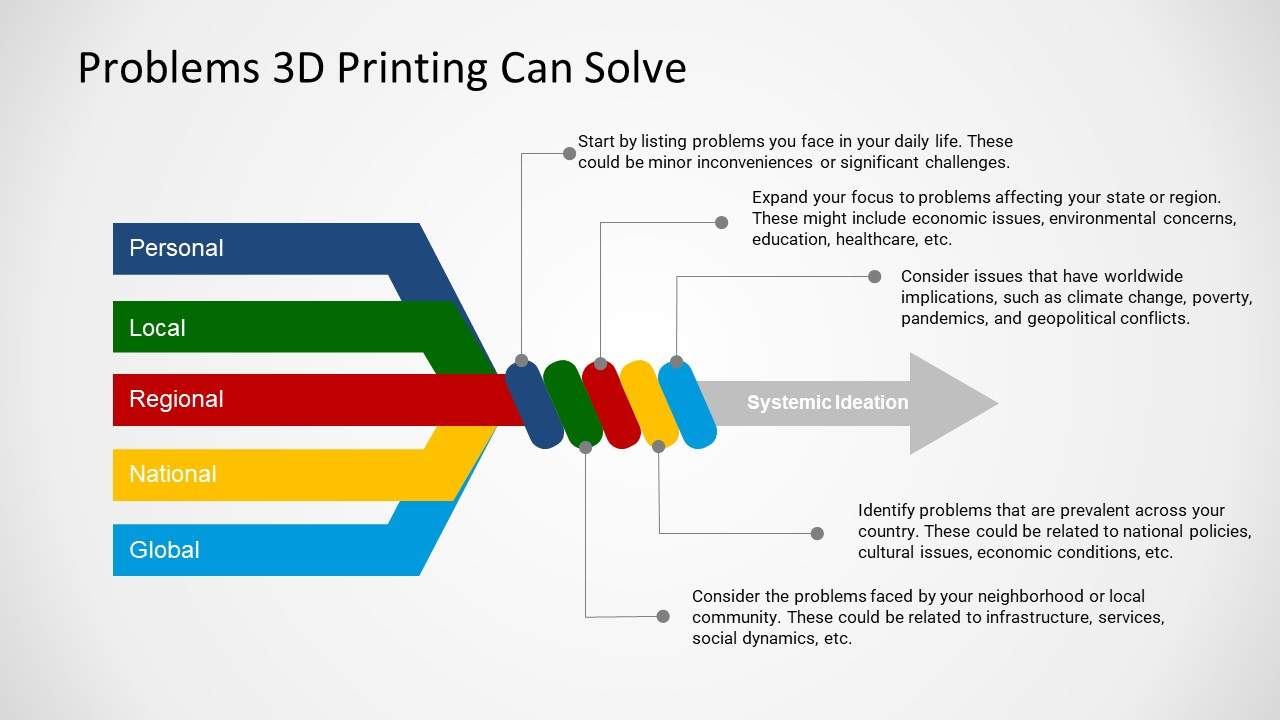
Use the categories below to expand your brainstorming.
Personal Problems
- List personal problems you face in your daily life. These can be minor inconveniences or significant challenges.
- For each problem, write a detailed description that explains when and where it happens, why it is a problem, and how it impacts you.
- Brainstorm workable solutions for each problem. Do not filter ideas at this stage. Focus on quantity over quality.
Local Problems
- Consider problems faced by your neighborhood or local community. These might involve infrastructure, services, or social dynamics.
- Gather information from local news, neighbors, or community meetings.
- Write detailed descriptions of the problems, including their scope and impact.
- Brainstorm possible solutions that use local resources and community strengths.
Regional Problems
- Expand your thinking to problems affecting your state or region, such as economic issues, environmental concerns, education, or healthcare.
- Use regional news sources, reports, and government publications to research them.
- Document each problem thoroughly and consider its broader implications.
- Brainstorm solutions with regional policies and resources in mind.
National Problems
- Identify problems that are prevalent across your country, such as policy, cultural, or economic challenges.
- Research national news, government reports, and studies from research organizations.
- Describe how these issues affect different regions and demographics.
- Generate ideas for solving these problems while considering political, economic, and social context.
Global Problems
- Consider worldwide challenges such as climate change, poverty, pandemics, and geopolitical conflict.
- Research international reporting and sources from global organizations such as the UN or WHO.
- Describe the causes, effects, and current efforts related to each problem.
- Brainstorm innovative and scalable solutions that could help address them.
Systemic Ideation Challenge
When looking at a problem for the first time, it can feel like there are too many possible solutions or no possible solution at all. Use the systemic approach to break large problems into systems and brainstorm possible solutions.
Generate your own prompts involving problems that may seem impossible. Examples include:
- Building a factory to produce a product
- Starting a business to sell a product internationally
- Creating a product that can solve a local problem
Walk through the process of systemic brainstorming by breaking the problem into systems.
Mind Mapping
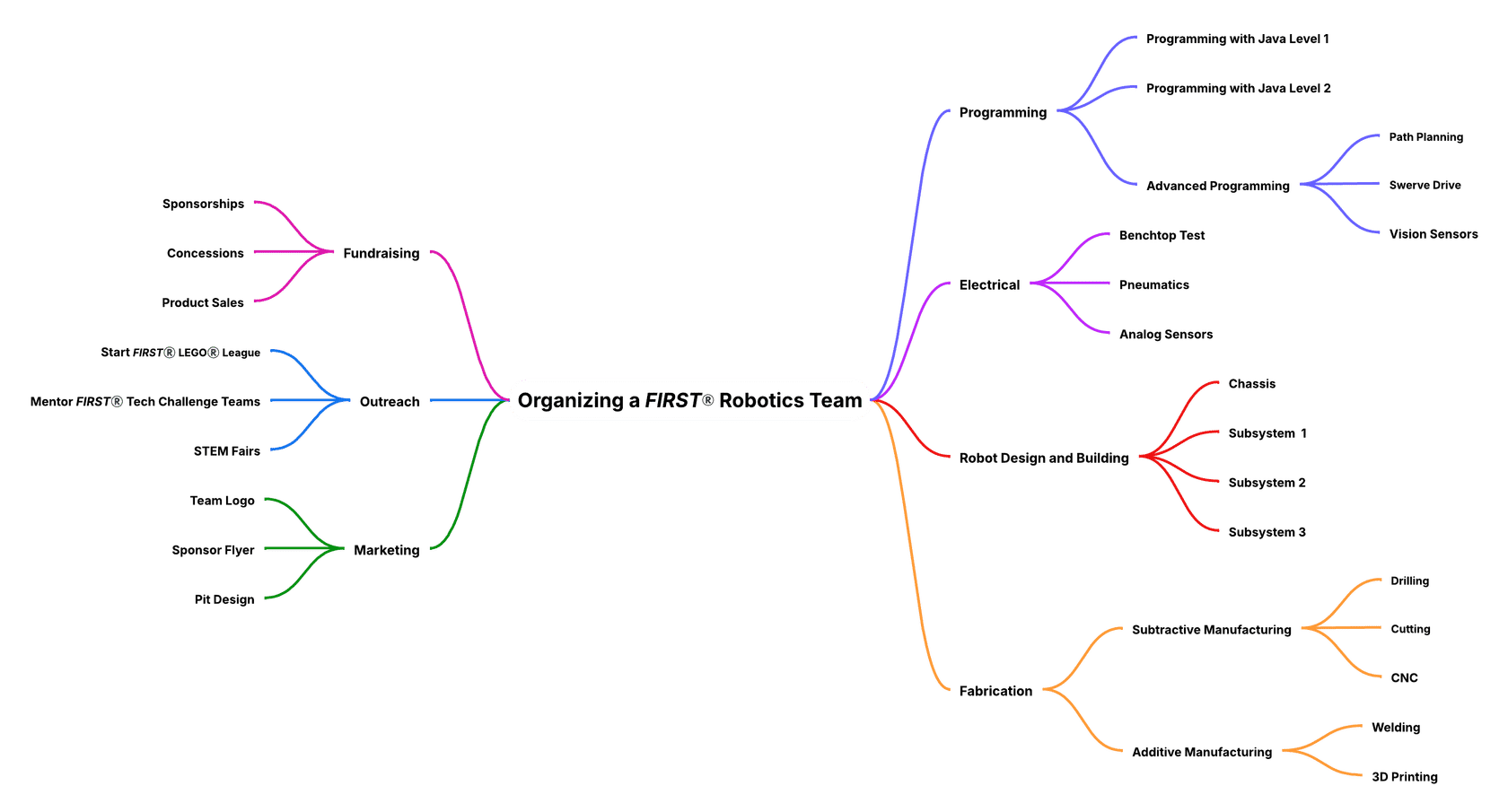
Mind mapping is a visual brainstorming tool that helps organize information, generate ideas, and make connections between concepts. A central idea branches into related subtopics and supporting details.
Example
Main Topic
- Start by identifying the main topic or central idea you want to explore.
- Place that idea in the center of a page or digital canvas.
- Use a keyword, short phrase, image, or symbol to represent it.
Main Branches
- Determine the major subtopics connected to the central idea.
- Draw one branch outward for each subtopic.
- Label each branch with a keyword or short phrase.
Sub-Branches
- Add smaller branches for details, examples, or related concepts.
- Use keywords or short phrases to keep the map clear.
Layer Information
- Continue branching into finer details as needed.
- Look for relationships between different branches and show those connections with lines or arrows.
Color Code
- Use different colors to distinguish branches or subtopics.
- Add images, icons, or symbols to make the mind map easier to understand and remember.
Review and Refine
- Review the map to make sure important ideas are included.
- Rearrange branches if needed to improve flow and clarity.
- Remove repeated or irrelevant information so the map stays focused.
Mind Mapping Challenge
Create a mind map, on paper or digitally, for the problem: "How can AI impact the workforce skills needed in the future?" Brainstorm possible causes and solutions related to this problem.
Presentation | Share Out
Create a presentation under 5 minutes about your brainstorming method.